I am an operational excellence consultant, author of 7 books, and researcher on nonlinearities, complex systems, and emergent human behavior.
I help organizations implement an antifragile operational culture and I assist executives in building sustainable behavioral change
(read more or contact me).
Below, you can find my latest books and projects.

My consulting
I advise companies on Antifragile Operations and Behavioral Change.
Antifragile Operations are about simple best practices that companies incorporate in the day-to-day of their managers and in their process management to achieve effective operations that get stronger whenever a problem surfaces. (I also hold regular workshops on antifragile organizations.)
Behavioral Change is about permanently introduce a change in how the workforce behaves, including the adoption of safety measures, specific procedures, and Core Values. I achieve this by training managers and executives about the principles that drive change and sustain it so that it doesn’t revert as soon as priorities change.
I usually work with CEOs, COOs, Plant Managers, and Operations Managers.
My workshops
I regularly teach masters and MBA modules, and frequently organize workshops in Europe and Asia.
Currently, I’m also holding regular online courses and workshops on antifragile organizations and on adaptive systems.
I also hold private workshops on operational culture, antifragility, ergodicity, behavioral safety, cultural change, team management (at C-suite level or Operations Managers / Plant managers level), operations management, safety management, risk management (fat-tailed risks), innovation management, behavioral change, autistic perception and communication, and a variety of other topics.
If you are interested in me holding a session on one of the topics of my expertise, drop me an email and shortly explain who would attend and what problem they are trying to solve.
A preview of my books
“The Most Important Property to Understand in Probability, in Life, in Anything.” – Nassim Nicholas Taleb on ergodicity.
“I think the most under-rated idea is ergodicity.” – David Perell, author.
…
Read more about the contents of the book here.
The Control Heuristic is the overarching principle guiding all human behavior. Our brains make decisions trying to minimize overall risk. This simple rule has far reaching implications, which are examined in both a theoretical and a practical way.
At a first look, human behavior appears as an inexplicable mess. Why do we behave irrationally? Why do I behave irrationally? Why is it so hard to change? What is happiness and why does it seem to escape us?
The Control Heuristic offers a new perspective to answer these questions and provides a guiding light to shed the darkness of the subconscious resistances that prevent us to behave like the man or woman we want to be.
“I am amazed at Luca Dellanna’s ability to observe, compile, and articulate 99 very actionable life principles here.
Each chapter describes the rule in a way that makes you think and then summarizes the Action.
It’s filled with DEEP insights yet VERY readable.”
– Theresia Tanzil
“Luca Dellanna’s new book “100 Truths” is super tight! […] Practical, directional advice.”
– Hari Meyyappan
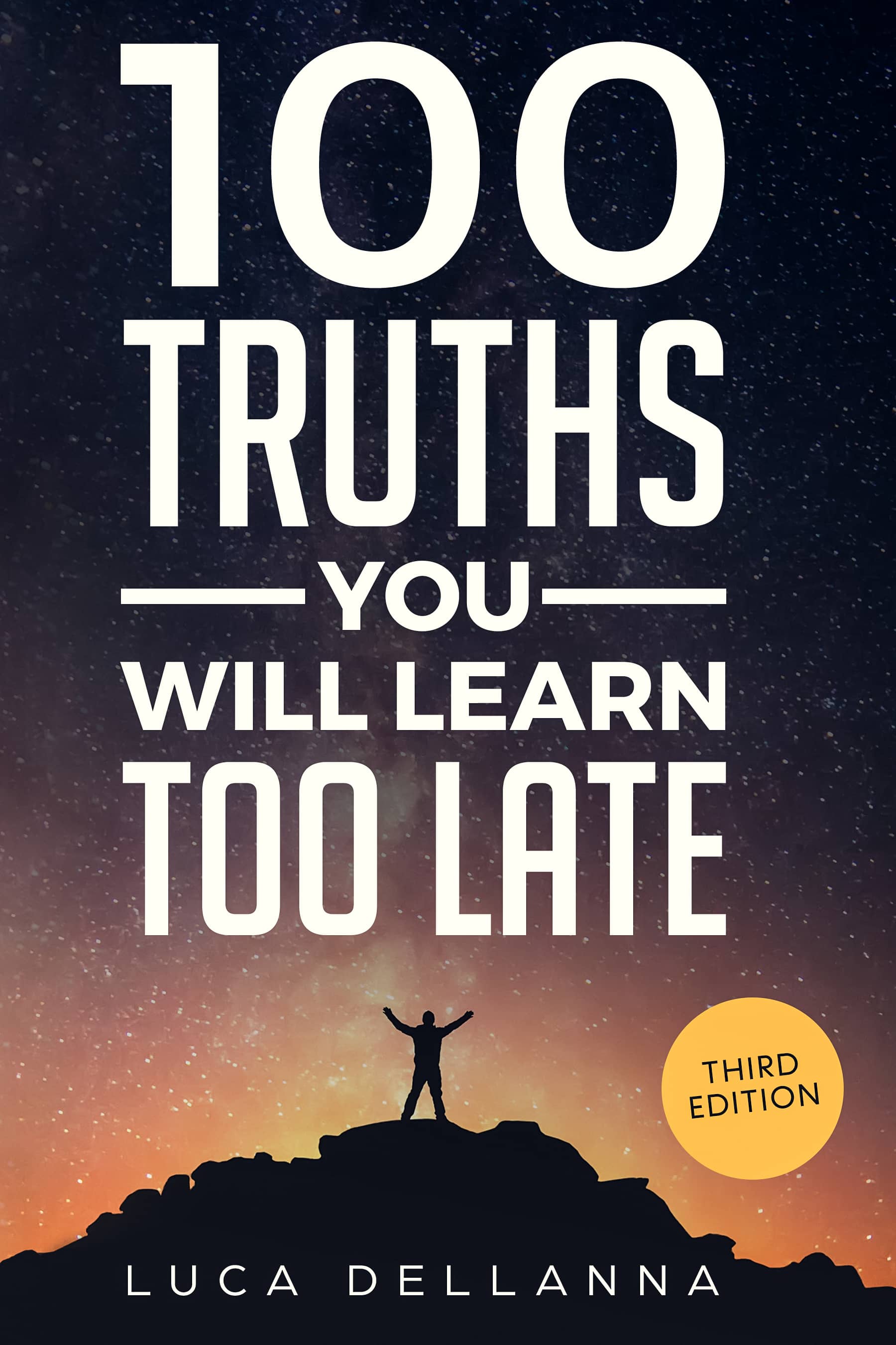
100 mental models to ease your way through life
I wasted years of my life, because I did not know its rules.
I did not know the rules of relationships, of careers, of health, of happiness.
Then, through hard work, talking with mentors and trial & error, I uncovered some of them.
Now, I lay these rules out for you. In this book, you will find 100 of the lessons I learnt.
The titles of some of the sections inside include
- Problems grow the size needed for you to acknowledge them.
- Taking a course of action makes it easier to take it again, for better or for worse.
- Other people’s expectations aren’t your problem.
- Hating those who despise what you want will prevent you from obtaining it.
- Discipline is freedom.
- Extraordinary people are extraordinarily selective.
- Successful people, at some point of their life, committed to the hard choice.
- Self-respect is the compass for change that matter.
- The standards you have today determine the life you will have in a few years
- People are extremely good at succeeding at their priorities and extremely dishonest about them.
- Your problems aren’t different.
- Listening is about not projecting your own world-views.
- … and 86 more.
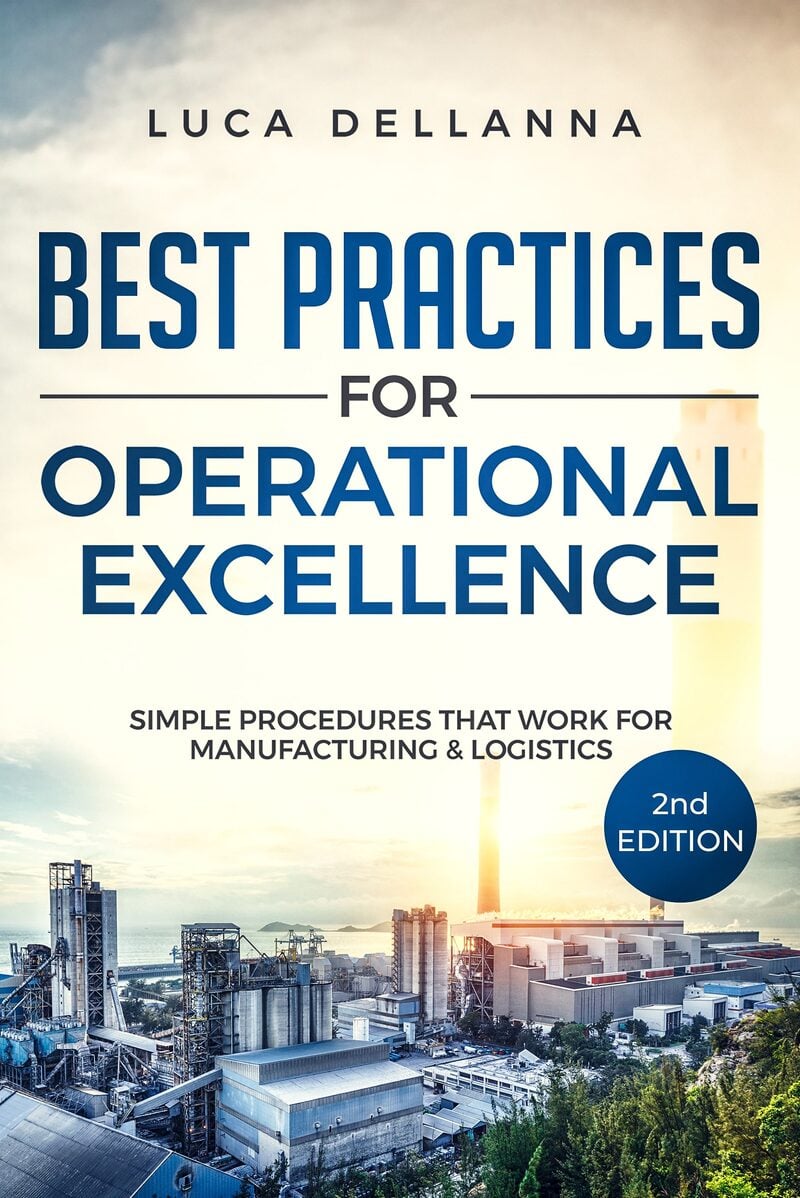
- The 4 Principles of Operational Excellence, that determine whether your company or unit will operate smoothly or always react to the last problem.
- The 8 Best Practices of Operational Excellence, that effective managers use on a weekly or monthly basis to ensure that the Principles are followed in practice every day, even when conditions are not optimal.
- How to get buy-in, a roadmap for an impactful roll-out and systems to sustain the change. This book does not let you alone with the complex reality of implementing change in a big company where multiple projects and agendas are involved.
About this book
A complete playbook with best practices you can apply starting today in your company, to translate into impactful action the Principles of Operational Excellence.
It includes comparisons between the actions of good managers and bad ones, lots of detailed examples and word-by-word scripts.
How to get buy-in and how to roll-out
Other books only describe how an effective company looks like, ignoring how to get there. This book doesn’t leave you alone with the implementation. It proposes practical tactics and word-by-word scripts you can use to obtain buy-in from the Top Management and to roll-out the change initiatives.
The complete toolkit for the operations managers and supervisors in manufacturing and logistics
- Handle unmotivated workers and instill newfound proactivity.
- Get your workers to work safely, even when the boss is not looking.
- Get your employees to keep an orderly work-floor, even when they are not motivated.
- Get your quality up, while decreasing the cognitive load of your workers.
- Manage a fast-changing company, where workers fail to keep up with growth and change.
In this handbook, you will find all the procedures you need to run your operations smoothly.
Procedures that work in practice
You will only find methods that are simple enough to be easily implemented and reliable enough to work even when your workers are tired or distracted. You will find procedures that stay into place even when priorities change and when your company scales.
The difference between mediocre and great team managers is that the latter understood that teams are adaptive systems. Of course, no one teaches this. So, I see many managers blind to the consequences that their actions have to the motivation and future behavior of their team.
Conversely, great managers understand the indirect effects of their actions. For example, they know that an employee that does something good in January expects to be acknowledged for it in January; and if the manager waits for the quarterly review to do that, the employee will learn in the meantime that good performance goes unrewarded, and adapt accordingly by working less hard.
Great managers are not great because of natural charisma. They are great because they take action based not on its direct result but on the behaviors it makes more likely in the future.
That’s why I wrote this book – to give you an understanding of team dynamics to which you might be oblivious. At the end of each chapter I included a few practical exercises, to ensure that the know-how will transform into action.
My second Roam Book, this book will teach you 5 proven principles of management and will guide you by hand on how to implement them in your organization.
Roam Books are books in Roam Research format: they directly integrate into your notes and are made to provide a rich experience after their first reading.
A book to understand the Autism Spectrum Disorder.
Imagine looking at the world through a magnifying glass all the time.
Being able to see a only a detail at a time, but to see it so well as to be hypnotized by it.
Imagine always being slower than everyone around you.
Imagine being unable to communicate with others, because you are talking about that detail, while they are talking about the big picture.
Imagine being so good at seeing the details, and feel so useless, because no one cares about them.
This book is for parents, friend or anyone related to someone with Autism.
This is for neurologists and psychologists to help them understand the world of ASD.
This is for people on the Spectrum, to help them understand themselves.
Some of the topics covered inside:
- The Magnifying Glass: a metaphor to understand perception under the Spectrum.
- Why people on the Spectrum are impaired in contextual fields (such as personal communication) and advantaged in mastering detailed fields (such as computer science).
- Peripheral Functionality Blindness: the reason people on the Spectrum do not develop appropriate body language and facial expressivity.
- Prioritization by Specificity: the reason literal meaning is the only thing which matters, for people on the Spectrum.
- The High-Pass filter: a novel hypothesis for the Autism Spectrum Disorder, coherent with previous theories and experimental results.
⭐️⭐️⭐️⭐️⭐️ 4.67 average rating on Goodreads.
“The Power of Adaptation” focuses on the topic of adaptation as the main force shaping the world as we know it.
However, adaptation is an emergent process and thus cannot be understood with narratives nor it can be acted upon directly. This book aims to describe the basic phenomena which weave together into what we perceive as adaptation and to provide a guide to help the readers practicing the four behaviors that will help him harness, rather than fight, change.
This book is for you if:
- You like books dense of information
- You appreciated books such as Taleb’s Antifragile
- You understand or are willing to accept that the world is dynamic, and that understanding how something changes is more important than understanding how something works now.
- You do not like usual business/self-help books which provide solutions which only work in the short-term
- You understand that some effort is needed in order to achieve long-lasting improvement
This book is not for you if:
- You are easily triggered by ideas you do not like
- You want a simple book which will magically solve all your problems